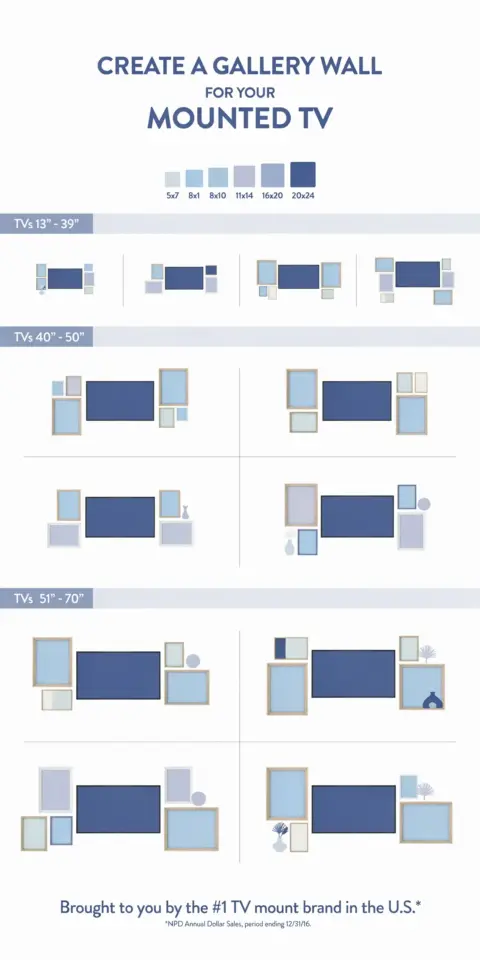
If you want to turn your television into a stylish focal point instead of a black rectangle on the wall, you need some TV gallery wall ideas that actually work. I have seen too many living rooms where the TV sits alone like an afterthought. A gallery wall around it can change that completely. You just need a plan that balances art with the screen so nothing fights for attention. This is beginner friendly, I promise. We will talk about layouts, frames, placement, and even what kinds of art to choose. No design degree required.
Why a Gallery Wall Around Your TV Works
A gallery wall around TV solves the problem of a big dark screen dominating your room. Instead of trying to hide the television, you make it part of a larger composition. The art around it pulls the eye outward, so the TV feels like just one piece of the display. This works especially well in open plan living spaces where the TV wall is the first thing people see.
Another benefit is that you can change the art seasonally or when you get bored. The TV stays fixed, but the frames around it can rotate. That keeps the wall fresh without buying new furniture. Plus, a well done gallery wall makes your room look collected and intentional, not like you just mounted a screen and called it done.
Choosing the Right Frames for Your TV Wall
The frames for TV wall selection matters more than most beginners realize. You do not want frames that are too thin and get lost against the wall, or too chunky that they overwhelm the TV. I recommend frames that are at least one inch wide for the border, but two inches is better if your TV is 55 inches or larger. Stick to a consistent frame color family. Black, dark wood, or metallic silver all pair well with most TVs.
Here is a quick checklist for picking frames:
- Choose the same frame style for all pieces to create unity.
- Avoid glossy finishes that reflect glare from the TV screen.
- Use mats in neutral tones like off white or light gray to separate the art from the frame.
- Keep the frame depth shallow so the art sits close to the wall, not sticking out far.
I personally like a mix of black and natural wood frames because they feel warm but still modern. Avoid mixing too many colors unless you are going for a very eclectic look, which is harder to pull off over a TV.
Symmetry vs. Asymmetry: Which Layout is Best?
When you search for symmetry gallery wall TV layouts, you will see a lot of tidy grids that mirror each other on both sides of the screen. Symmetry is the safest option for beginners. It looks clean and balanced, especially if your TV is centered on the wall. You place two matching frames on each side, or one large piece above, and maybe a smaller piece below. Simple and effective.
Asymmetry works if your TV is off center or if you want a more relaxed, collected look. You can cluster frames of different sizes on one side while leaving the other side more open. This is harder to get right because you have to balance visual weight. A good trick is to use a large frame on the lighter side to even things out. For most people, I suggest starting with a symmetrical layout. You can always tweak it later.
How to Plan Your Framed Art Layout on Paper
Before you hammer a single nail, do some planning art layout for TV on paper or using painter’s tape on the wall. This step saves you from crooked holes and disappointed looks. Measure your TV width and height. Then decide how much space you want between the top of the TV and the first frame. I usually leave 4 to 6 inches of empty wall above the screen. Too close looks cramped, too far feels disconnected.
Draw a simple rectangle for the TV in the center of a piece of paper. Then draw smaller rectangles for your frames around it. Play with the arrangement until it feels balanced. Better yet, cut out paper squares the same size as your frames and tape them on the wall. Live with that layout for a day. Move things around until it looks right to you. That paper method has saved me from many mistakes.
Step by Step: Hanging Frames Around Your TV
Now for the actual hanging frames around TV process. Gather a level, measuring tape, pencil, and picture hangers that can support the weight of your frames. Start by hanging the top center piece first if you are using symmetry. That gives you a reference point. Then work outward, checking level after each frame.
For frames directly beside the TV, keep a gap of 3 to 5 inches between the edge of the screen and the inner edge of the frame. This spacing prevents the art from visually touching the TV. If your TV is mounted on a bracket that tilts, make sure the frames do not block the movement. Also, consider the viewing angle. You want the frames at eye level or slightly above, not so high that you have to crane your neck.
Ideas for Art That Complements
#TVGalleryWall #FramedArtLayouts #LivingRoomDecor #GalleryWallIdeas #TVWallArt
Leave a Comment